src="files/scottish-fold_pictures.jpg">
Cat Breed Guide: Scottish Fold
This is a breed that has been overbred and carries a genetic defect. We want to raise awareness and give you an impression of this special breed of cat.
We love all cats – no matter what shape, colour or coat they have. That's probably true for most cat lovers. And if we're honest – who among us can walk past a cute cat without giving it a stroke? Still, people have different tastes and preferences, and that also shows in the choice of the cat that suits them best. That's exactly why there are so many cat breeds, which differ clearly in appearance, behaviour and temperament. It's only through targeted breeding that certain wishes for a particular look or coat length can be fulfilled. Over the decades – even centuries – these breeding efforts have produced dozens of cat breeds worldwide.
Anyone thinking about getting a cat usually asks themselves first: what suits me, what do I like, and where can I get exactly what I have in mind? We've touched on elsewhere why looks should really be one of the less important reasons for getting a cat, and what should matter instead when a new family member moves in. But for everyone who consciously decides to get a particular breed, our new, regularly appearing breed guide is here to give you a few pointers.
The Scottish Fold
A face straight out of a picture book, fur that feels like silk, and a captivating personality…the Scottish Fold is a cat many people dream of. The animals with the distinctive folded ears are simply adorable, right? At first glance – absolutely. Their baby-face features, the stocky body with charmingly short little legs, and the often-observed "Buddha sit" quickly touch a soft spot in most people. And we at LucyBalu admit it – when we see a Scottish Fold in our newsfeed or in a story, we sometimes let out a quiet awwww too…
But sadly, this breed carries a heavy burden. Its distinctive looks stem from a genetic defect that unfortunately isn't limited to folded ears. Breeding Scottish Folds is theoretically prohibited in Germany, and practically all official bodies and authorities even classify the Scottish Fold as what's known as torture breeding. So what's really behind this?
This is a breed that has been overbred and carries a genetic defect. We want to raise awareness and give you an impression of this special breed of cat.
We love all cats – no matter what shape, colour or coat they have. That's probably true for most cat lovers. And if we're honest – who among us can walk past a cute cat without giving it a stroke? Still, people have different tastes and preferences, and that also shows in the choice of the cat that suits them best. That's exactly why there are so many cat breeds, which differ clearly in appearance, behaviour and temperament. It's only through targeted breeding that certain wishes for a particular look or coat length can be fulfilled. Over the decades – even centuries – these breeding efforts have produced dozens of cat breeds worldwide.
Anyone thinking about getting a cat usually asks themselves first: what suits me, what do I like, and where can I get exactly what I have in mind? We've touched on elsewhere why looks should really be one of the less important reasons for getting a cat, and what should matter instead when a new family member moves in. But for everyone who consciously decides to get a particular breed, our new, regularly appearing breed guide is here to give you a few pointers.
The Scottish Fold
A face straight out of a picture book, fur that feels like silk, and a captivating personality…the Scottish Fold is a cat many people dream of. The animals with the distinctive folded ears are simply adorable, right? At first glance – absolutely. Their baby-face features, the stocky body with charmingly short little legs, and the often-observed "Buddha sit" quickly touch a soft spot in most people. And we at LucyBalu admit it – when we see a Scottish Fold in our newsfeed or in a story, we sometimes let out a quiet awwww too…
But sadly, this breed carries a heavy burden. Its distinctive looks stem from a genetic defect that unfortunately isn't limited to folded ears. Breeding Scottish Folds is theoretically prohibited in Germany, and practically all official bodies and authorities even classify the Scottish Fold as what's known as torture breeding. So what's really behind this?
How it all began..
As early as the 19th century, cats with strangely folded ears were described in China, and at the beginning of the 20th century this curiosity was also observed in England. The first official breeding attempts finally produced kittens with folded ears in the 1960s – the little ones came from a pairing of a folded-ear tomcat and a British Shorthair queen. Since these velvet paws have an incredibly appealing look and their round little heads have a high cuteness factor, the breed quickly went on to conquer the world. The Scottish Fold was especially well received in the USA.
While breeding in Europe was suspended after just a few years because problems were observed in the animals, it continued in America. And: the Scottish Fold – and its breeding – also persisted in Germany.
The Price of Beauty
As we've already mentioned – the little velvet paw's looks definitely have the cuteness factor. Scottish Folds are medium-sized, stocky cats with rather short legs and almost sturdy bodies. With males weighing a maximum of six kilograms, this cuddly companion stays relatively small and light. The head is very round, the eyes large – and also very round. This breed really ticks every box of the baby-face schema you could think of.
The character of the folded-ear cats certainly also contributes to their great popularity. They're considered loving, affectionate cats that like to take things easy while still being playful and even good with children. What more could you wish for? Unfortunately, most of these seemingly wonderful traits don't come without a price. These cats owe their cute looks to a genetic defect. This genetic defect is inherited in an autosomal dominant manner – meaning that even cats resulting from a crossing with a Scottish Fold carry a high risk of inheriting this defect. We now know that mixed-breed cats can also suffer from serious health problems. So what's going on? Unfortunately, the genetic defect in question doesn't just cause folded ears.
The underlying incurable hereditary disease is called osteochondrodysplasia, or OCD for short. Like so many terms in medicine, the word comes from Greek and translates roughly to bone-cartilage malformation. This means the gene mutation can, in some cases, cause severe malformations of the joints, bones and cartilage. And unfortunately, even seemingly healthy animals can pass this defect on. That explains the stocky body, the short little legs and the often slightly uneven gait that owners describe in their folded-ear cats. The so-called, almost famous "Buddha pose" that Scottish Folds adopt is another sign of the severe damage caused by the genetic defect. That's because the cats sit in this striking position simply because it's the only way they can sit with reasonably little pain. Other problems associated with the genetic defect include pain when touched, reluctance to move, lameness and atypical movement patterns. Sounds terrible? It is.
How it all began..
As early as the 19th century, cats with strangely folded ears were described in China, and at the beginning of the 20th century this curiosity was also observed in England. The first official breeding attempts finally produced kittens with folded ears in the 1960s – the little ones came from a pairing of a folded-ear tomcat and a British Shorthair queen. Since these velvet paws have an incredibly appealing look and their round little heads have a high cuteness factor, the breed quickly went on to conquer the world. The Scottish Fold was especially well received in the USA.
While breeding in Europe was suspended after just a few years because problems were observed in the animals, it continued in America. And: the Scottish Fold – and its breeding – also persisted in Germany.
The Price of Beauty
As we've already mentioned – the little velvet paw's looks definitely have the cuteness factor. Scottish Folds are medium-sized, stocky cats with rather short legs and almost sturdy bodies. With males weighing a maximum of six kilograms, this cuddly companion stays relatively small and light. The head is very round, the eyes large – and also very round. This breed really ticks every box of the baby-face schema you could think of.
The character of the folded-ear cats certainly also contributes to their great popularity. They're considered loving, affectionate cats that like to take things easy while still being playful and even good with children. What more could you wish for? Unfortunately, most of these seemingly wonderful traits don't come without a price. These cats owe their cute looks to a genetic defect. This genetic defect is inherited in an autosomal dominant manner – meaning that even cats resulting from a crossing with a Scottish Fold carry a high risk of inheriting this defect. We now know that mixed-breed cats can also suffer from serious health problems. So what's going on? Unfortunately, the genetic defect in question doesn't just cause folded ears.
The underlying incurable hereditary disease is called osteochondrodysplasia, or OCD for short. Like so many terms in medicine, the word comes from Greek and translates roughly to bone-cartilage malformation. This means the gene mutation can, in some cases, cause severe malformations of the joints, bones and cartilage. And unfortunately, even seemingly healthy animals can pass this defect on. That explains the stocky body, the short little legs and the often slightly uneven gait that owners describe in their folded-ear cats. The so-called, almost famous "Buddha pose" that Scottish Folds adopt is another sign of the severe damage caused by the genetic defect. That's because the cats sit in this striking position simply because it's the only way they can sit with reasonably little pain. Other problems associated with the genetic defect include pain when touched, reluctance to move, lameness and atypical movement patterns. Sounds terrible? It is.
The Silent Suffering of Cats
Of course, no owner wants their cat to suffer. And we're sure we're speaking for all of you when we say: we really do pay close attention to how our beloved pets are doing. But here our house tigers have a huge problem: many cats show little to no signs of pain or suffering at all. That's true of all cats – it's one of the traits that makes them so independent. So we often don't even notice ourselves just how much our beloved family members are actually suffering. On top of that, after a while we tend to become "blind to the obvious" – and no longer see limping, slow walking or very sluggish behaviour as unusual.
The issue with breeding Scottish Folds has by now even reached lawmakers. In general, so-called torture breeding is prohibited under Germany's Animal Welfare Act, §11b. The definition of exactly what does and doesn't count as torture breeding is primarily up to the responsible authorities. The Scottish Fold has since been classified as just such a case, and breeding it – including crossing it with other cat breeds – has therefore been theoretically prohibited ever since. However, this is far from being widely understood everywhere, and even long-time fans of the breed don't always see the full extent of the problem.
What can we do?
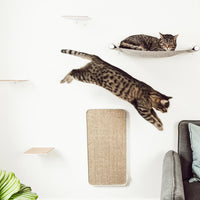
We believe an owner's responsibility generally lies in making sure their cat is doing as well as possible. That means, for example, taking your cat to a specialised vet to clarify just how severe the damage from the genetic defect actually is. If you notice an "uneven" gait and the vet suspects there's pain behind it, medication can help a great deal. The cat's living environment can also be adapted so that jumps no longer need to be high or far to reach a favourite spot…as you can see, owners of folded-ear cats do have real options for dealing with the problems that already exist.
As for getting a new Scottish Fold, we at LucyBalu clearly advise against it. There's simply no way to predict beforehand how painful and complicated the life of this cat with the cute little face will turn out to be. And that argument is enough for us. There are plenty of other cats out there who suit us, suit you, and suit our families – accepting pain for the sake of a certain look is simply not an option for us. And so we hope that in a few years' time, while we'll still think fondly of these round-faced cuddlers, they will no longer be bred to satisfy people's demands.
The Silent Suffering of Cats
Of course, no owner wants their cat to suffer. And we're sure we're speaking for all of you when we say: we really do pay close attention to how our beloved pets are doing. But here our house tigers have a huge problem: many cats show little to no signs of pain or suffering at all. That's true of all cats – it's one of the traits that makes them so independent. So we often don't even notice ourselves just how much our beloved family members are actually suffering. On top of that, after a while we tend to become "blind to the obvious" – and no longer see limping, slow walking or very sluggish behaviour as unusual.
The issue with breeding Scottish Folds has by now even reached lawmakers. In general, so-called torture breeding is prohibited under Germany's Animal Welfare Act, §11b. The definition of exactly what does and doesn't count as torture breeding is primarily up to the responsible authorities. The Scottish Fold has since been classified as just such a case, and breeding it – including crossing it with other cat breeds – has therefore been theoretically prohibited ever since. However, this is far from being widely understood everywhere, and even long-time fans of the breed don't always see the full extent of the problem.
What can we do?
We believe an owner's responsibility generally lies in making sure their cat is doing as well as possible. That means, for example, taking your cat to a specialised vet to clarify just how severe the damage from the genetic defect actually is. If you notice an "uneven" gait and the vet suspects there's pain behind it, medication can help a great deal. The cat's living environment can also be adapted so that jumps no longer need to be high or far to reach a favourite spot…as you can see, owners of folded-ear cats do have real options for dealing with the problems that already exist.
As for getting a new Scottish Fold, we at LucyBalu clearly advise against it. There's simply no way to predict beforehand how painful and complicated the life of this cat with the cute little face will turn out to be. And that argument is enough for us. There are plenty of other cats out there who suit us, suit you, and suit our families – accepting pain for the sake of a certain look is simply not an option for us. And so we hope that in a few years' time, while we'll still think fondly of these round-faced cuddlers, they will no longer be bred to satisfy people's demands.