Mathias Wahrenberger, 26.02.2026

Good news – kittens learn the litter box almost by themselves

The most reassuring info first: kittens have a built-in “litter box compass”. Usually, they learn to use the litter box not through training but through instinct. Starting at around 3–4 weeks of age, kittens begin to relieve themselves independently – provided the litter box is easy to reach, clean, and not scary.

So for the start: simple, open, calm. An open litter box without a hood is ideal, because kittens can’t yet assess their surroundings. High rims, flaps, or even automatic noises can quickly feel intimidating. A sturdy, hygienic model like the STEELOO Litter Box or the ARENA Litter Box offers the best conditions here: odor-neutral, easy to clean, and easy to overview – exactly what kittens need.

Gently place your kitten in the litter box after eating or sleeping. Usually, that’s all it takes. Please don’t demonstrate scratching or guide their paws – that tends to confuse them more. If an accident happens: stay calm, clean up without comment. Punishing or scolding is absolutely taboo, since cats don’t connect that with their behavior.

The right litter also matters: fine, soft, and odor-neutral. Strongly scented litter or coarse pellets can put kittens off. The more natural the litter, the better the start.

Good news – kittens learn the litter box almost by themselves

The most reassuring info first: kittens have a built-in “litter box compass”. Usually, they learn to use the litter box not through training but through instinct. Starting at around 3–4 weeks of age, kittens begin to relieve themselves independently – provided the litter box is easy to reach, clean, and not scary.

So for the start: simple, open, calm. An open litter box without a hood is ideal, because kittens can’t yet assess their surroundings. High rims, flaps, or even automatic noises can quickly feel intimidating. A sturdy, hygienic model like the STEELOO Litter Box or the ARENA Litter Box offers the best conditions here: odor-neutral, easy to clean, and easy to overview – exactly what kittens need.

Gently place your kitten in the litter box after eating or sleeping. Usually, that’s all it takes. Please don’t demonstrate scratching or guide their paws – that tends to confuse them more. If an accident happens: stay calm, clean up without comment. Punishing or scolding is absolutely taboo, since cats don’t connect that with their behavior.

The right litter also matters: fine, soft, and odor-neutral. Strongly scented litter or coarse pellets can put kittens off. The more natural the litter, the better the start.

Changing the Location? Yes – But Please With a Plan

The location of the litter box matters more than many people think. For kittens, the rule is: short distances, little commotion. At first, the litter box shouldn't be in the bathroom, basement, or behind five doors, but wherever the cat spends most of its time anyway.

Can you change the location later? Yes – but gradually, please. Cats are creatures of habit. If you suddenly move the litter box completely, it can happen that your cat no longer finds it or avoids it. The solution: move the box over several days bit by bit – for example, a few feet each day. Alternatively, you can set up a second litter box temporarily.

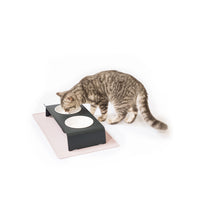
A common mistake is placing the litter box too close to the feeding spot. Cats instinctively separate “eating” and “toilet”. Ideally, the feeding spot (e.g. with the BOWL Feeding Bowl on a CIRCLE or SQUARE Bowl Mat) and the litter box are in different zones.

When does a covered litter box make sense? At the earliest, once your cat:

  • is reliably litter trained
  • shows no fear of tight spaces
  • uses an open litter box without any problems

Many cats, by the way, never like covered toilets – because odors build up and there's no escape route. So the rule is: hood = option, not a must.

Changing the Location? Yes – But Please With a Plan

The location of the litter box matters more than many people think. For kittens, the rule is: short distances, little commotion. At first, the litter box shouldn't be in the bathroom, basement, or behind five doors, but wherever the cat spends most of its time anyway.

Can you change the location later? Yes – but gradually, please. Cats are creatures of habit. If you suddenly move the litter box completely, it can happen that your cat no longer finds it or avoids it. The solution: move the box over several days bit by bit – for example, a few feet each day. Alternatively, you can set up a second litter box temporarily.

A common mistake is placing the litter box too close to the feeding spot. Cats instinctively separate “eating” and “toilet”. Ideally, the feeding spot (e.g. with the BOWL Feeding Bowl on a CIRCLE or SQUARE Bowl Mat) and the litter box are in different zones.

When does a covered litter box make sense? At the earliest, once your cat:

  • is reliably litter trained
  • shows no fear of tight spaces
  • uses an open litter box without any problems

Many cats, by the way, never like covered toilets – because odors build up and there's no escape route. So the rule is: hood = option, not a must.

Automatic Litter Boxes – Modern, But Not Always Cat-Friendly

Automatic litter boxes sound tempting: self-cleaning, futuristic, convenient. For kittens, however, they should be approached with caution. Noises, movement, and unexpected sequences can startle kittens – in the worst case so much that they avoid the litter box altogether.

Kittens learn through predictability. A litter box that suddenly moves, spins, or hums loudly contradicts this need. Also, young cats often lack the weight to trigger sensors correctly – or they move around inside during the cleaning cycle. That's exactly why many vets and behavior experts advise against using automatic litter boxes for kittens.

Simple solutions are often better hygienically, too: an open, easy-to-clean stainless steel litter box like STEELOO can be quickly washed out, disinfected, and kept odor-free – with zero tech stress.

Bottom line: for kittens, less tech means more security. A clearly structured routine, a well-placed location, gentle litter, and patience will almost always reliably lead to litter training success. And if there's an accident after all? Your cat won't think: “I was bad”, but rather: “I'm still learning.” And that's exactly okay.

Automatic Litter Boxes – Modern, But Not Always Cat-Friendly

Automatic litter boxes sound tempting: self-cleaning, futuristic, convenient. For kittens, however, they should be approached with caution. Noises, movement, and unexpected sequences can startle kittens – in the worst case so much that they avoid the litter box altogether.

Kittens learn through predictability. A litter box that suddenly moves, spins, or hums loudly contradicts this need. Also, young cats often lack the weight to trigger sensors correctly – or they move around inside during the cleaning cycle. That's exactly why many vets and behavior experts advise against using automatic litter boxes for kittens.

Simple solutions are often better hygienically, too: an open, easy-to-clean stainless steel litter box like STEELOO can be quickly washed out, disinfected, and kept odor-free – with zero tech stress.

Bottom line: for kittens, less tech means more security. A clearly structured routine, a well-placed location, gentle litter, and patience will almost always reliably lead to litter training success. And if there's an accident after all? Your cat won't think: “I was bad”, but rather: “I'm still learning.” And that's exactly okay.

Entdecke LucyBalu