Autumn brings a special challenge for cats – the coat change. As temperatures shift, a cat's coat adapts, with the lighter summer coat making way for a denser winter coat. For you as a cat owner, this means more loose hair, but also the need to give your cat extra support during this phase.
Why is the autumn coat change important?
The coat change is a natural process in which cats shed their old, lighter summer coat and grow a denser winter coat to better protect themselves from the cold. During this time, coat care can be challenging, as your cat loses a lot of hair that ends up on furniture, clothing, and floors – and not least in its stomach. If the hair ends up on your furniture, you can remove it quite easily with the Lint Brush HAIRY.
Interesting facts about the coat change in cats
Twice a year: Cats typically change their coat twice a year – in spring and in autumn – to prepare for temperature changes.
- Coat structure: The summer coat is lighter and thinner, while the winter coat is denser and more insulating, protecting cats from the cold.
- Hair loss: During the coat change, cats can lose up to three times more hair than usual.
- Indoor vs. outdoor cats: Indoor cats can lose hair all year round, as they're less bound to the natural change of seasons due to artificial lighting and constant room temperatures.
- Duration of the coat change: The coat change usually lasts 4 to 6 weeks, but can take longer for some cats, depending on breed and environment.
- All breeds affected: Although all cat breeds go through a coat change, it's often less noticeable in short-haired breeds. Long-haired cats like the Maine Coon need extra care during this time.
- Preventing hairballs: Regular brushing during the coat change can reduce the amount of swallowed hair by up to 90%.
How often should I brush my cat during the coat change?
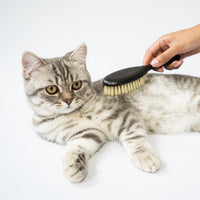
During the coat change, you should brush your cat at least once a day. This helps remove loose hair and prevents your cat from swallowing it while grooming, which can lead to hairballs. Brushing is especially essential for long-haired cats to prevent matting.
Tip: Use special brushes or combs suited to your cat's coat length and texture. Rubber brushes are ideal for short-haired cats, while de-matting combs and brushes with rounded bristles are ideal for long-haired cats.
Autumn brings a special challenge for cats – the coat change. As temperatures shift, a cat's coat adapts, with the lighter summer coat making way for a denser winter coat. For you as a cat owner, this means more loose hair, but also the need to give your cat extra support during this phase.
Why is the autumn coat change important?
The coat change is a natural process in which cats shed their old, lighter summer coat and grow a denser winter coat to better protect themselves from the cold. During this time, coat care can be challenging, as your cat loses a lot of hair that ends up on furniture, clothing, and floors – and not least in its stomach. If the hair ends up on your furniture, you can remove it quite easily with the Lint Brush HAIRY.
Interesting facts about the coat change in cats
Twice a year: Cats typically change their coat twice a year – in spring and in autumn – to prepare for temperature changes.
- Coat structure: The summer coat is lighter and thinner, while the winter coat is denser and more insulating, protecting cats from the cold.
- Hair loss: During the coat change, cats can lose up to three times more hair than usual.
- Indoor vs. outdoor cats: Indoor cats can lose hair all year round, as they're less bound to the natural change of seasons due to artificial lighting and constant room temperatures.
- Duration of the coat change: The coat change usually lasts 4 to 6 weeks, but can take longer for some cats, depending on breed and environment.
- All breeds affected: Although all cat breeds go through a coat change, it's often less noticeable in short-haired breeds. Long-haired cats like the Maine Coon need extra care during this time.
- Preventing hairballs: Regular brushing during the coat change can reduce the amount of swallowed hair by up to 90%.
How often should I brush my cat during the coat change?
During the coat change, you should brush your cat at least once a day. This helps remove loose hair and prevents your cat from swallowing it while grooming, which can lead to hairballs. Brushing is especially essential for long-haired cats to prevent matting.
Tip: Use special brushes or combs suited to your cat's coat length and texture. Rubber brushes are ideal for short-haired cats, while de-matting combs and brushes with rounded bristles are ideal for long-haired cats.


 src="files/fellpflege_pictures.jpg">